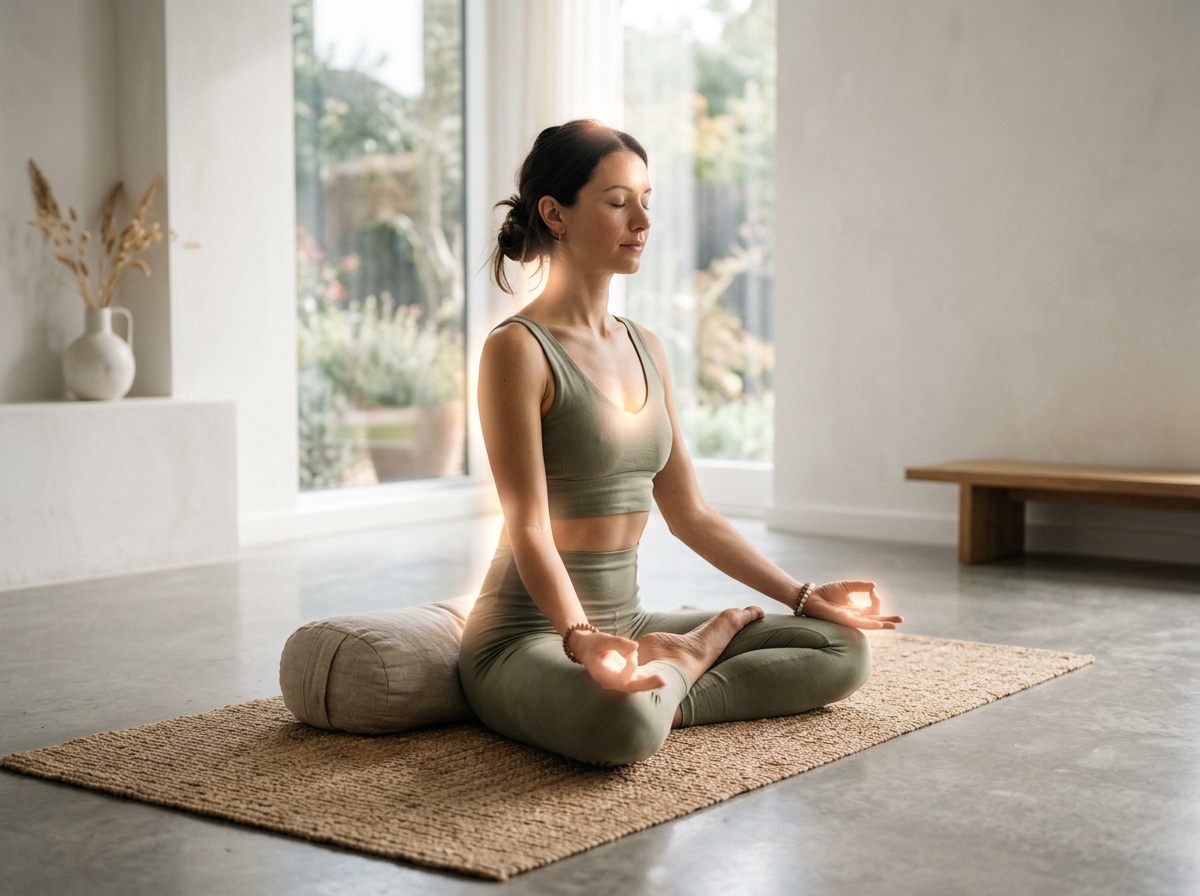
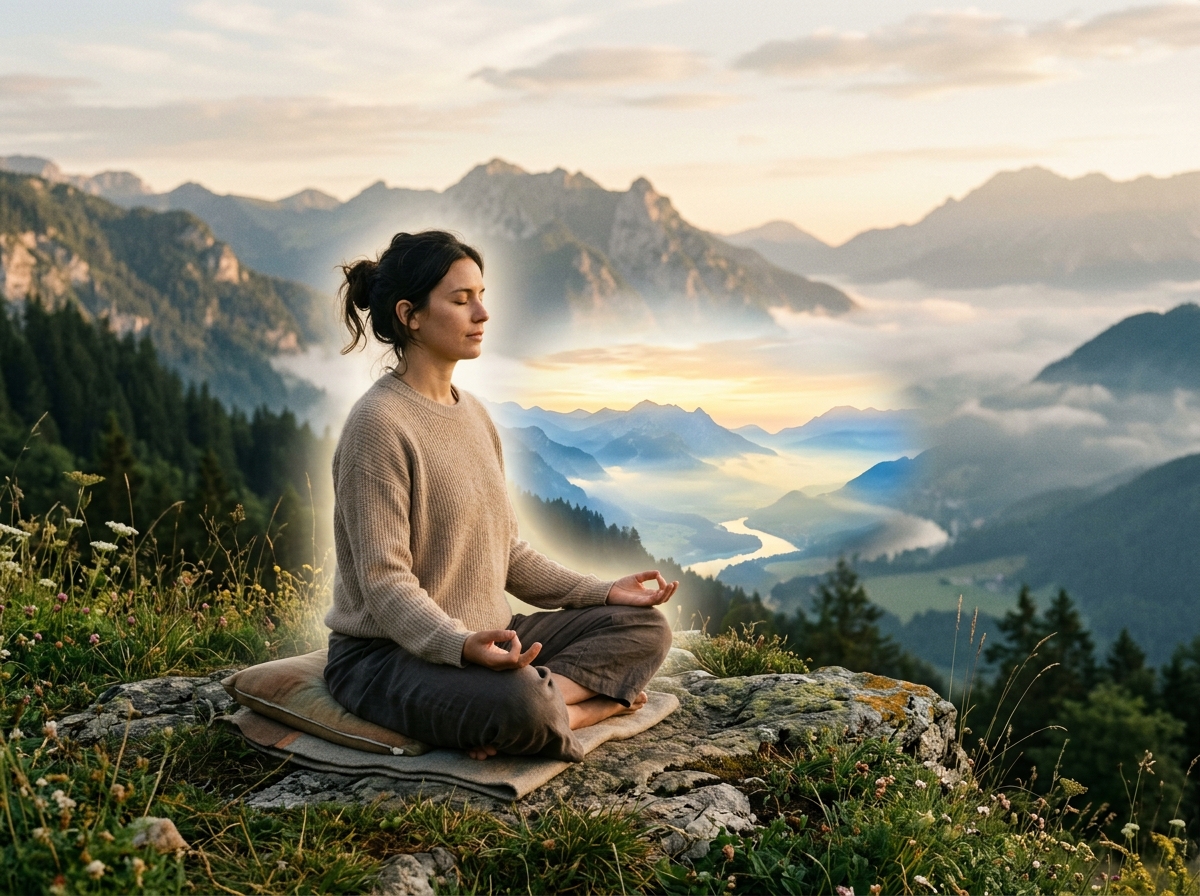
RAMA’S YOGA

Balance Your Mind & Body

Discover harmony through movement, breath and awareness.

Explore Yoga
ASANA

Move With Awareness

Strength • Flexibility • Stability • Balance

MINDFUL PRACTICE

Grow With Grace

Gentle movement, mindful breathing and a peaceful connection with nature.

———
Scroll to explore
The Rama’s Yoga Journey

Yoga is More Than Movement

A journey that begins with the body, deepens through the breath and settles within the mind.

BODY
01 · ASANA

Move With Purpose

Build strength, mobility, stability and conscious movement.

→
BREATH
02 · PRANAYAMA

Breathe With Awareness

Develop awareness of the breath and its relationship with body and mind.

→
MIND
03 · MEDITATION

Return to Stillness

Cultivate awareness, concentration and inner stillness.

Awareness · Breath · Balance
Understand the Practice

What is Yoga?

Yoga is a holistic discipline that brings together movement, breath, awareness and mindful living. It extends beyond physical postures and encourages balance between body and mind.

01AsanaPhysical Postures02PranayamaBreath Regulation03MeditationMental Awareness04RelaxationDeep Rest05MindfulnessPresent-Moment Awareness

“Yoga is the journey of the self, through the self, to the self.”

— Bhagavad Gita
Why Rama’s Yoga?

Practice With Purpose

Guidance designed to help you understand your practice, not simply follow it.

01◈

Certified Yoga Training

Structured guidance rooted in yoga education.

02◎

Personalized Guidance

Practice adapted to your body and goals.

03✦

Beginner to Advanced

Progress at a pace that respects your ability.

04☼

Meditation & Pranayama

Develop breath awareness and inner calm.

05↗

Online & Personal Sessions

Flexible ways to keep your practice consistent.

06∞

Holistic Wellness Approach

Connect movement, awareness and mindful living.

Benefits of Practice

From Practice to Everyday Life

BODY

Build a body that moves with confidence.

Flexibility, strength, mobility and postural awareness can grow through consistent, mindful practice.

FlexibilityStrengthMobilityPosture
Your Yoga Journey

From Movement to Stillness

01ARRIVECome as you are.
02BREATHEReconnect with your breath.
03MOVEDevelop conscious movement.
04OBSERVEBring awareness inward.
05BALANCECreate harmony between body and mind.
Our Story

About Rama’s Yoga

Rama’s Yoga brings together traditional yoga knowledge, mindful movement and modern understanding to create a calm, purposeful practice.

M.A. YogaMaster of Arts in Yoga B.P.Ed.Bachelor of Physical Education DNHENutrition & Health Education Yogic ScienceDiploma in Yogic Science
Discover Our Story →
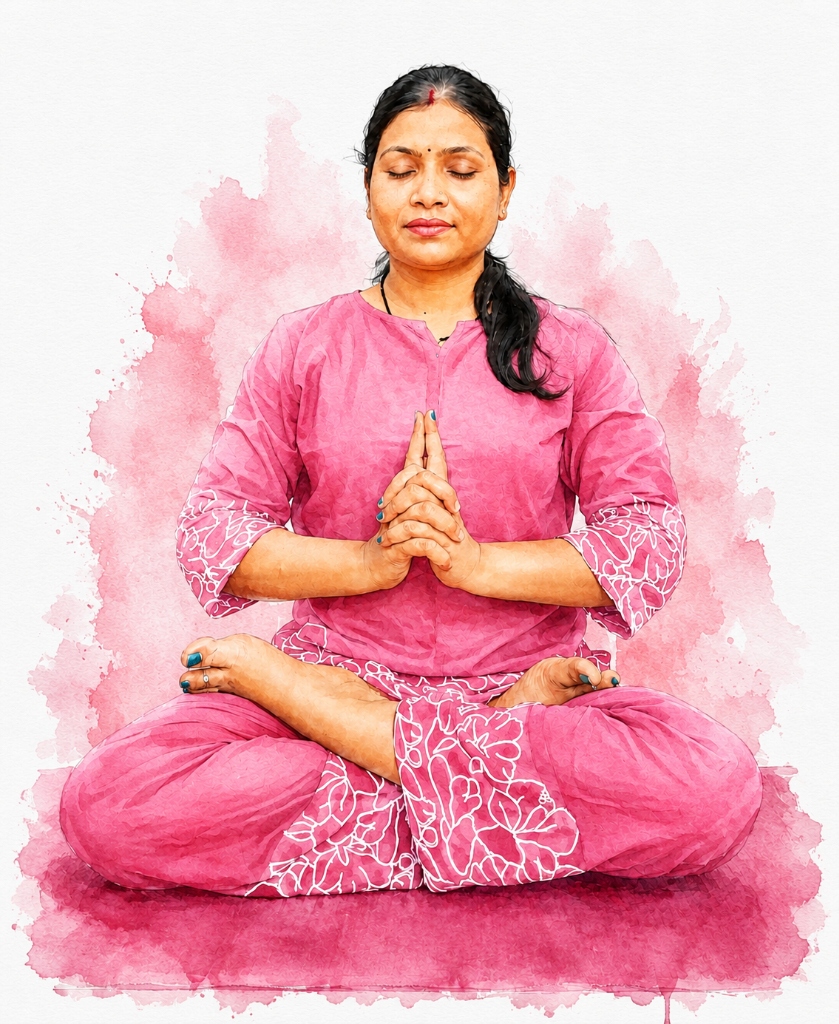
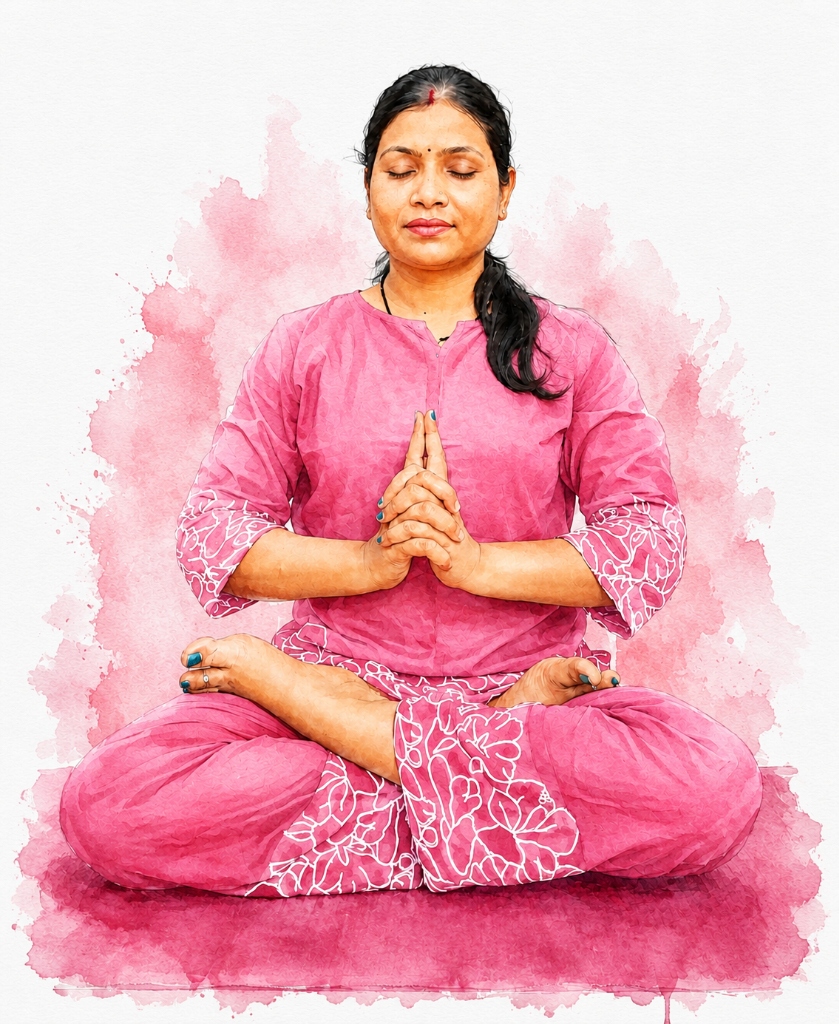
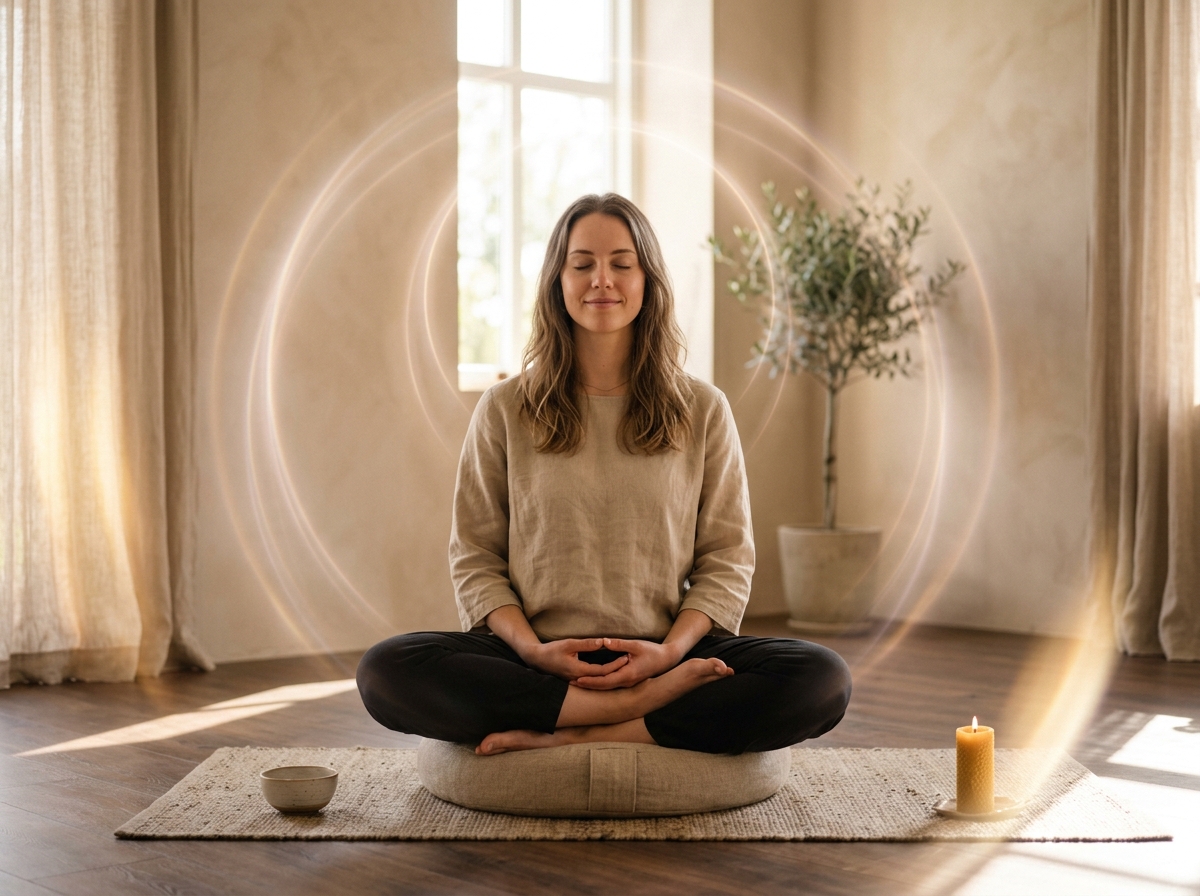
Rama’s Yoga — Rama in meditation
Your Practice Begins Here

Start Your Yoga Journey

Move with awareness. Breathe with intention. Live with balance.

Practice Anywhere · Rama’s Yoga

Yoga Classes & Pricing

Personalized, structured yoga sessions designed around your health goals, schedule, and preferred pace.

🟢 Online & Special Batches Open
Daily Group Practice

GROUP YOGA

₹999 / Month
  • Regular group yoga classes
  • Monday to Friday
  • Morning and evening batch options
  • Live interactive sessions
  • Suitable for regular / general yoga practice
Enquire Now
1-to-1 Private Mentorship

INDIVIDUAL YOGA

₹2,999 / Month
  • 1-to-1 personal yoga mentorship
  • Customized yoga practice for your anatomy
  • Personal guidance & progress tracking
  • Flexible timing adapted to your calendar
  • 100% individual attention & health therapy
Enquire Now
Live Batch Timings

Select Your Preferred Time Slot

⏱️ Click any slot to select & reserve
🌅 MORNING (Mon – Fri)
🌆 EVENING (Mon – Fri)
🧘 WEEKEND (Sat & Sun)
Selected Batch Slot: Morning · 6:00 AM (Monday to Friday)
Enquire on WhatsApp ↗
Specialized Programs

Explore Our 10 Class Types

Find the exact yoga program suited for your physical condition, age, lifestyle, and wellness milestones.

GROUP YOGA · ₹999/mo

1. Regular Yoga

Foundational asanas, daily mobility, functional strength, posture alignment, and steady breath awareness.

Suitable for:All Levels & Daily Practitioners
Available Timings:6/7/8 AM & 4/5/6/7/8 PM (Mon–Fri)
Category:Group Yoga (₹999 / Month)
Enquire
SPECIAL BATCH · ₹1,999/mo

2. Women’s Yoga

Mindful practices designed for hormonal balance, PCOD/PCOS, thyroid regulation, pelvic health, and vitality.

Suitable for:Women Seeking Restorative Wellness
Available Timings:Morning & Evening Special Batches
Category:Special Batch (₹1,999 / Month)
Enquire
SPECIAL BATCH · ₹1,999/mo

3. Kids Yoga

Fun-based yoga activities, animal poses, height growth, posture correction, and screen-detox focus for young minds (Ages 6–12).

Suitable for:Kids Ages 6–12 (Beginner Friendly)
Available Timings:7/8 AM & 4/5/6 PM (Mon–Fri & Weekend)
Category:Special Batch (₹1,999 / Month)
Enquire
SPECIAL BATCH · ₹1,999/mo

4. Pregnancy Yoga

Gentle, trimester-safe asanas, breathing techniques, pelvic floor relaxation, and calm mental preparation.

Suitable for:Expecting & Postnatal Mothers
Available Timings:Morning & Evening Guided Batches
Category:Special Batch (₹1,999 / Month)
Enquire
SPECIAL BATCH · ₹1,999/mo

5. Beginner Yoga

Step-by-step introduction to posture fundamentals, joint easing, correct breathing, and building a consistent routine.

Suitable for:First-Time Yoga Practitioners
Available Timings:Morning 6/7 AM & Evening 5/6 PM
Category:Special Batch (₹1,999 / Month)
Enquire
GROUP / SPECIAL BATCH

6. Weight Management Yoga

Dynamic Surya Namaskar flows, core activation, metabolic fire (Agni) ignition, and lean muscle endurance.

Suitable for:Fat Loss, Body Toning & Stamina
Available Timings:Morning 6/7 AM & Evening 6/7 PM
Category:Group (₹999) / Special (₹1,999)
Enquire
GROUP / SPECIAL BATCH

7. Stress Relief Yoga

Gentle restorative stretching, parasympathetic breathwork, Yoga Nidra, and sound relaxation for deep recovery.

Suitable for:Desk Workers, Burnout & Sleep Issues
Available Timings:Evening 6:00, 7:00, 8:00 PM (Mon–Fri)
Category:Group (₹999) / Special (₹1,999)
Enquire
SPECIAL BATCH · ₹1,999/mo

8. Advanced Yoga

Inversions, backbends, arm balances, dynamic transitions, bandhas, and advanced pranayama mastery.

Suitable for:Intermediate & Experienced Yogis
Available Timings:Morning 6:00/7:00 AM & Weekend
Category:Special Batch (₹1,999 / Month)
Enquire
INDIVIDUAL YOGA · ₹2,999/mo

9. Personal Yoga

1-to-1 customized guidance tailored to spine rehabilitation, cervical/sciatica care, flexibility goals, and private schedule.

Suitable for:1-on-1 Individual Attention & Therapy
Available Timings:Flexible Timing (Morning/Day/Evening)
Category:Individual Yoga (₹2,999 / Month)
Enquire
WEEKEND SPECIAL BATCH

10. Weekend Yoga

Weekend deep-dive practice combining extended alignment clinics, pranayama sessions, and guided meditation.

Suitable for:Working Professionals & Weekend Students
Available Timings:Saturday & Sunday (Time on Enquiry)
Category:Special Batch (Time on Enquiry)
Enquire
Beginner FriendlyDaily Live BatchesWomen’s Health Kids YogaSpine CarePranayamaTherapeutic Guidance
Enquire on WhatsApp
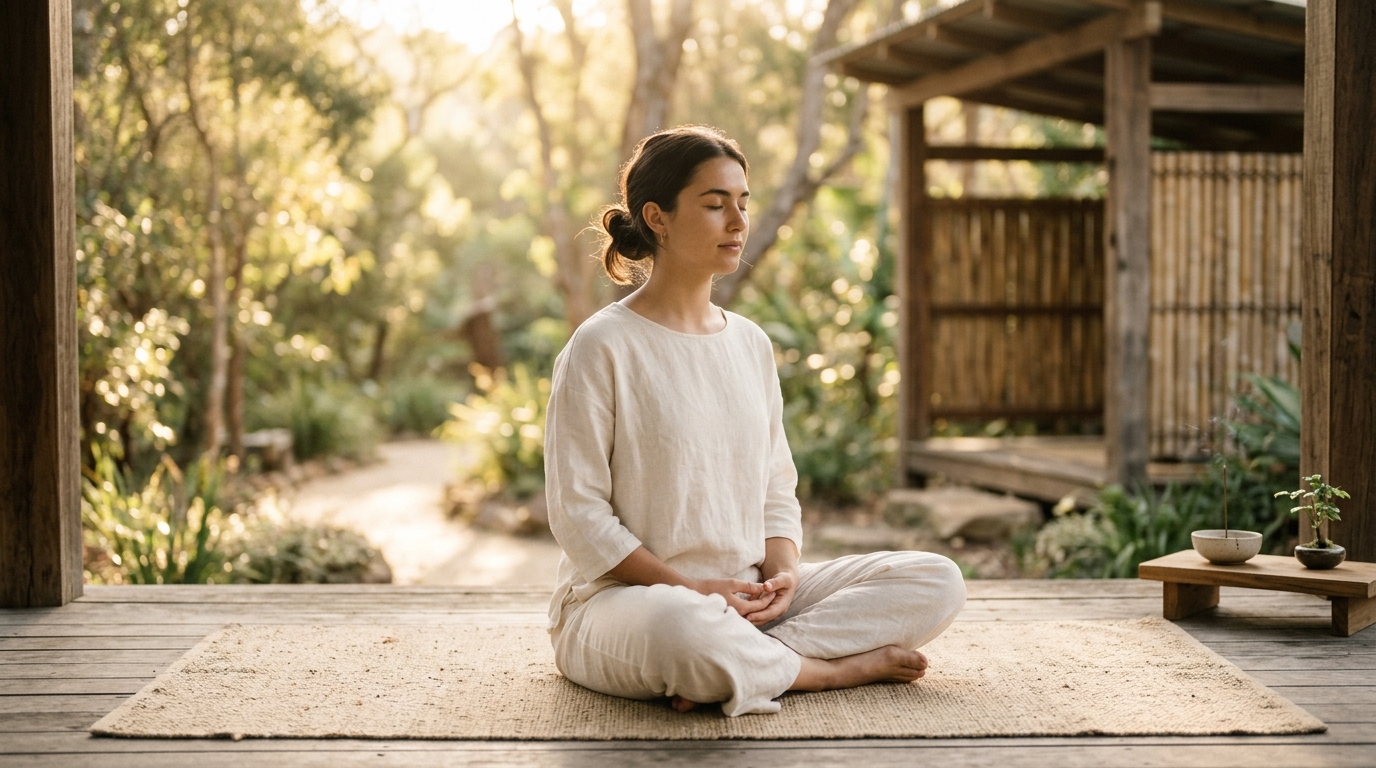
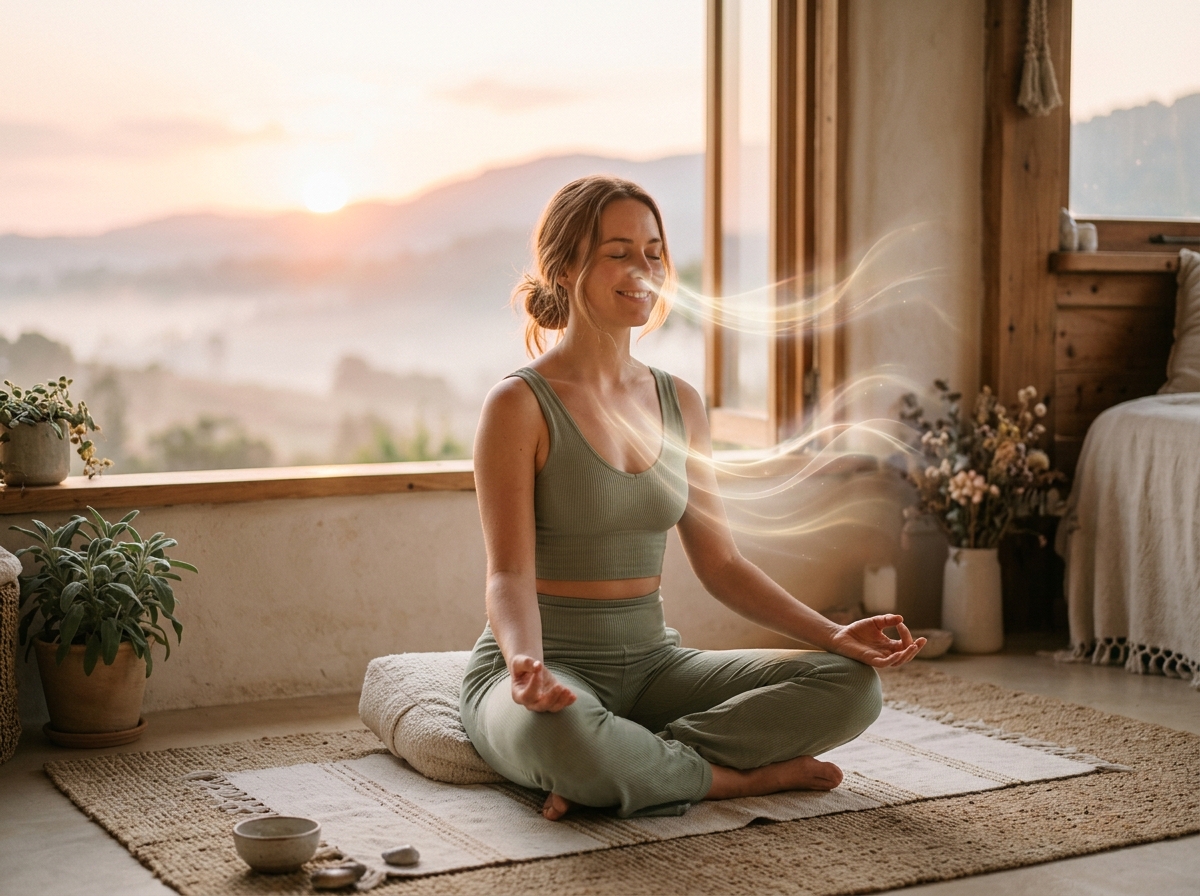
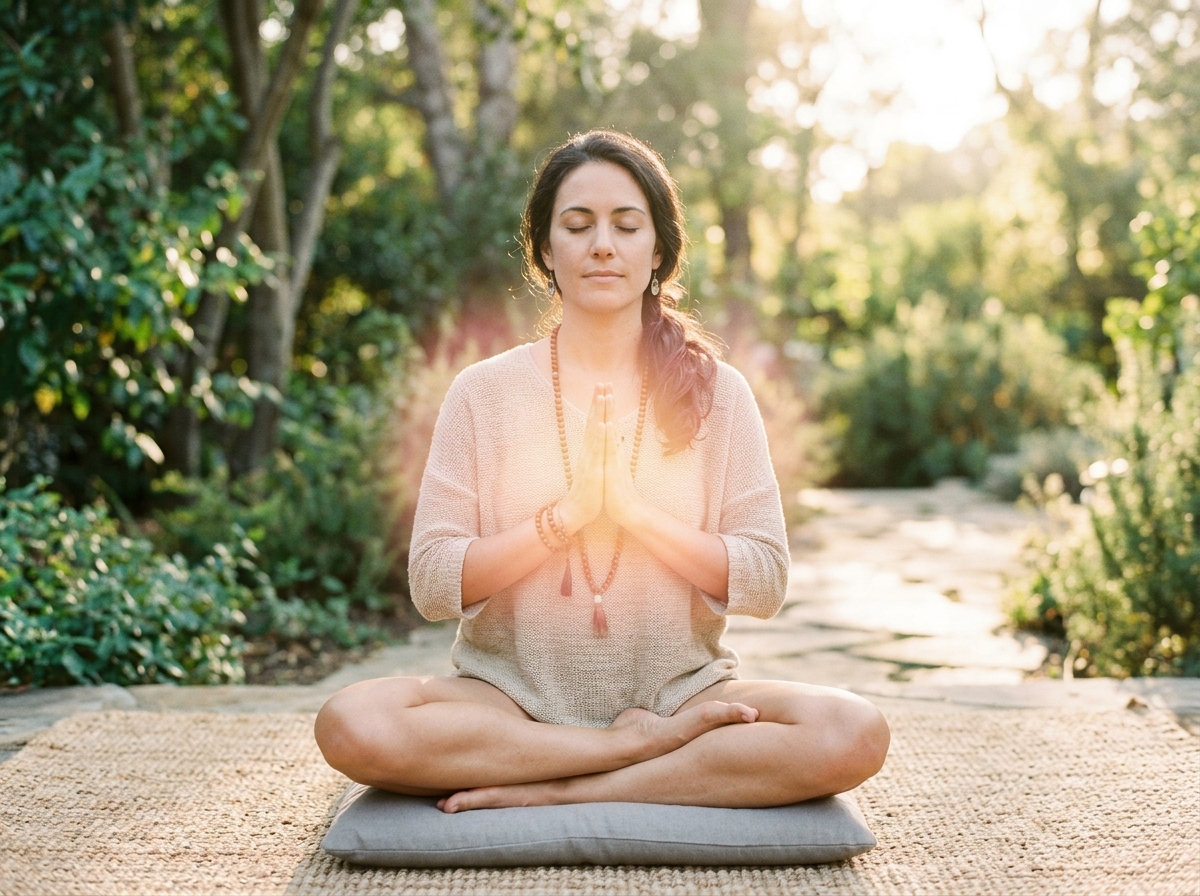
Peaceful person practicing meditation in a serene natural morning environment
🧘 MEDITATION & MINDFUL BREATHWORK SUITE

Return to Stillness

An evidence-based visual sanctuary to understand respiratory anatomy, quiet neural chatter, anchor attention in the breath, and cultivate abiding inner presence.

01 · Mind & Breath Dynamics

What is Meditation? (ध्यान की अवधारणा)

Meditation is the systematic training of attention and awareness. It is not forcing the mind to be blank, but learning to observe the present moment without reactive judgment.

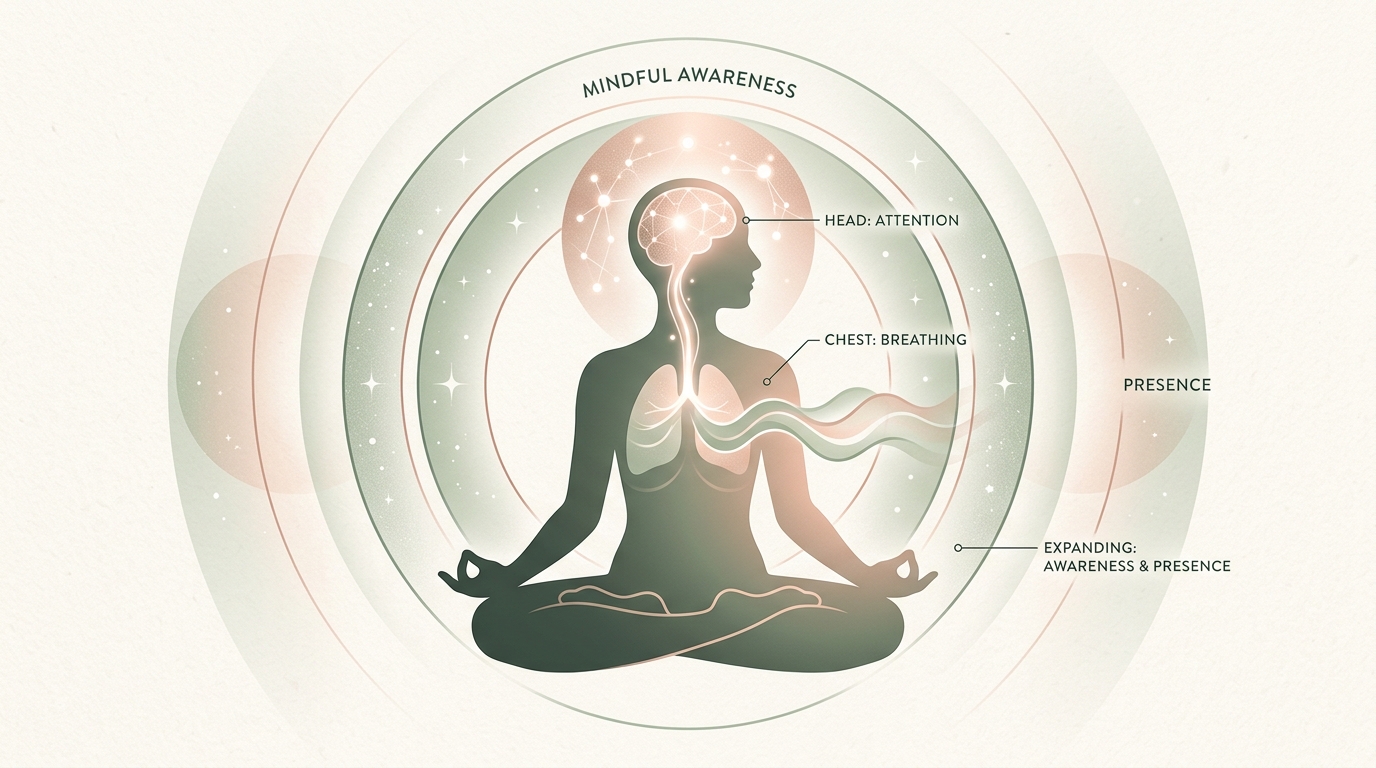
Educational infographic showing Attention in head, Breathing in chest, Awareness rings, and Presence
🧠 Concept Architecture · Attention anchored in the Breath radiates outward as Mindful Awareness and Present Stillness.
🎯

1. Attention (चित्त एकाग्रता)

Directing the conscious spotlight of the mind to a single anchor point—such as the subtle tactile sensation of air moving past the nostrils.

🫁

2. Breath (प्राण सेतु)

The natural respiratory rhythm serves as the bridge between voluntary conscious control and involuntary autonomic nervous system balance.

👁️

3. Awareness (साक्षी भाव)

Witnessing passing thoughts, bodily sensations, and ambient sounds like clouds floating across an open sky without clinging or resisting.

🌙

4. Presence (वर्तमान स्थिति)

Resting in unshakeable, non-reactive spacious awareness where mental turbulence settles into effortless stillness.

02 · Neuroscience & Cognitive Research

The Science of Meditation (मस्तिष्क एवं स्नायु विज्ञान)

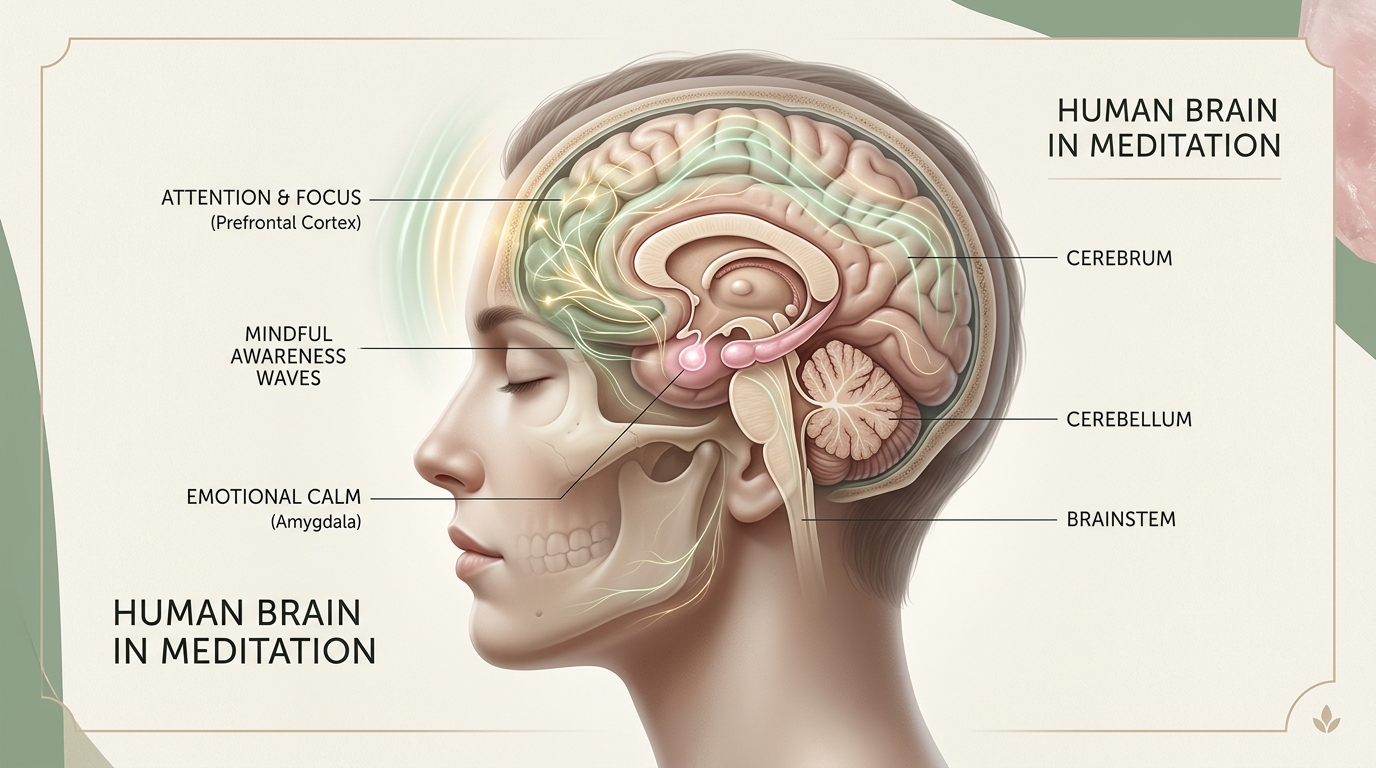
Modern functional neuroimaging reveals that regular mindfulness practice strengthens attentional circuits, reduces stress reactivity, and down-regulates mind-wandering.

Scientific 3D-style illustration of human brain in profile during meditation showing Attention, Awareness, and Emotional Calm
🔬 Neural Mechanisms · Prefrontal cortex activation, amygdala down-regulation, and Default Mode Network quieting.
EXECUTIVE FUNCTION

🧠 Prefrontal Cortex (Attention & Focus)

Increases gray matter density and cortical thickness in regions responsible for executive focus, working memory, and conscious decision making.

STRESS REGULATION

💓 Amygdala (Emotional De-escalation)

Reduces volumetric size and functional connectivity of the amygdala, dramatically dampening fear reflexes and lowering systemic cortisol release.

QUIETING CHATTER

🌊 Default Mode Network (DMN Quieting)

Suppresses hyperactivity in the brain's "internal chatter" network, decreasing rumination, past regrets, and future anxiety loops.

BODY SENSING

🧘 Insular Cortex (Interoceptive Awareness)

Heightens somatic sensitivity to heart rate, respiration, and gut sensations, fostering deep mind-body emotional harmony.

03 · Respiratory Biomechanics

Breathing Anatomy in Meditation (श्वास की शारीरिक क्रिया)

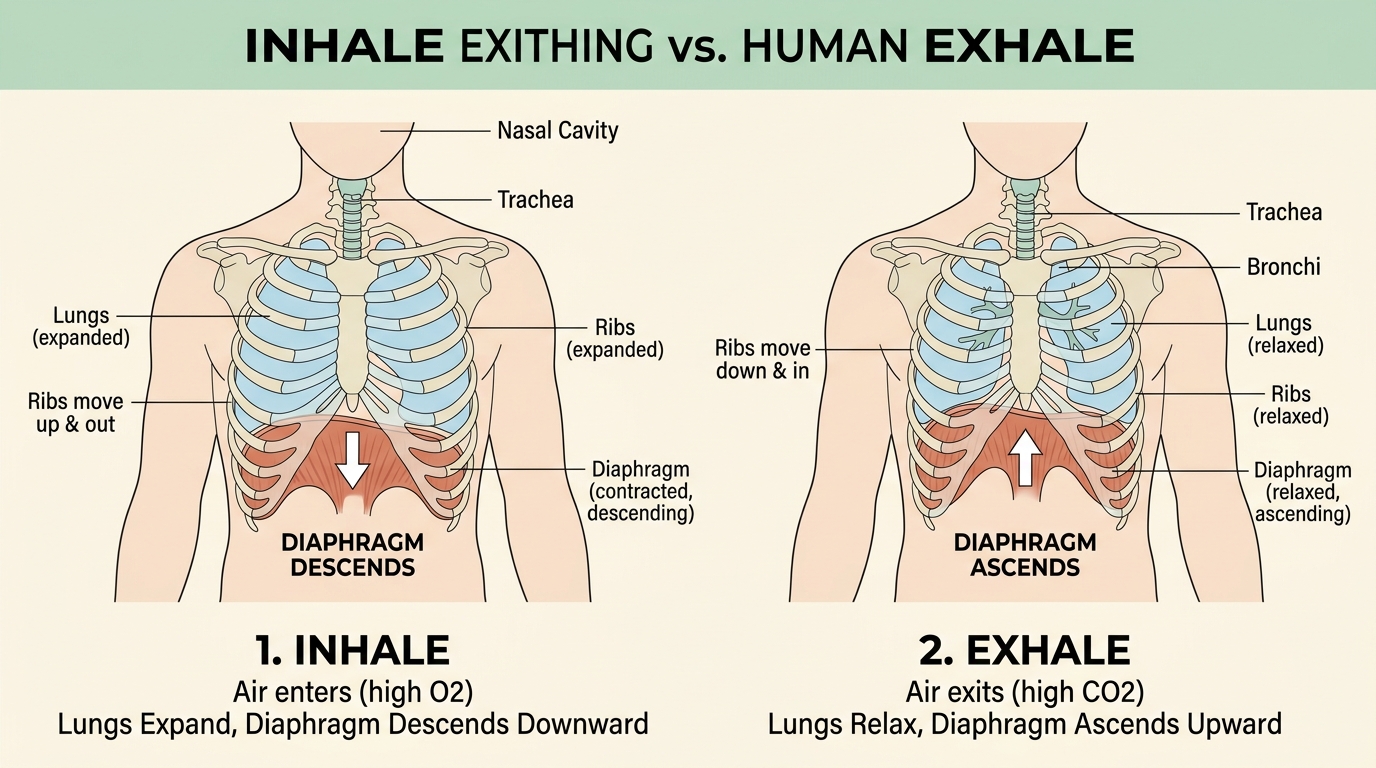
Understand how the diaphragm, rib cage, and intercostal muscles physically move during mindful diaphragmatic respiration.

Educational respiratory anatomy illustration comparing Inhale and Exhale mechanics
🫁 Respiratory Mechanics · Contracting diaphragm creates negative thoracic pressure, drawing oxygen deep into lower lung lobes.
PHASE 1 · INHALATION (पूरक)

Lungs Expand & Diaphragm Descends Downward

  • Diaphragm Contraction: The dome-shaped diaphragm muscle flattens and moves downward into the abdominal cavity.
  • Thoracic Expansion: External intercostal muscles lift the ribs upward and outward, expanding lung volume.
  • Pressure Differential: Decreased intrathoracic pressure pulls fresh oxygen-rich air through the nasal cavity into the alveoli.
  • Abdominal Softening: The belly gently swells forward as visceral organs make space for downward diaphragmatic excursion.
💡 Practice Cue: Never force the belly outwards with muscular effort; simply allow the descending diaphragm to gently move the abdomen naturally.
04 · Guided Respiratory Visualizer

Interactive Breath Pacer (श्वास तालबद्ध पेसर)

Synchronize your breath with our smooth expanding/contracting visual orb and gentle acoustic bowl chimes to balance your autonomic nervous system.

Ready ● Press Start
Cycles Completed: 0
05 · Meditation Taxonomy

5 Core Types of Meditation (ध्यान के ५ मुख्य प्रकार)

Explore five verified classical traditions and modern mindfulness modalities to find the practice that resonates with your temperament.

Breath Awareness Meditation showing subtle breathing flow visualization ANAPANASATI · प्राण धारणा

🫁 1. Breath Awareness Meditation

Anchoring attention exclusively on the natural, unforced flow of air entering and leaving the tip of the nose or upper lip.

  • Develops foundational attentional stability (Samatha).
  • Calms acute anxiety and overactive racing thoughts.
Mindfulness Meditation showing calm observation rings VIPASSANA · स्मृति एवं साक्षी

👁️ 2. Mindfulness Meditation

Cultivating open monitoring of all sensations, sounds, thoughts, and emotions without labeling them as good or bad.

  • Builds emotional resilience and non-reactivity.
  • Strengthens prefrontal executive cognitive control.
Body Awareness Meditation showing somatic glow zones YOGA NIDRA · कायानुप्रेक्षा

🧘 3. Somatic Body Awareness

Systematically scanning attention from the soles of the feet to the crown of the head, releasing micro-tensions in muscles and fascial chains.

  • Releases somatic trauma and chronic physical tightness.
  • Improves interoceptive insular brain signaling.
Visualization Meditation showing imagined mountain lake scenery BHAVANA · दृश्य ध्यान

🌊 4. Guided Visualization Meditation

Using vivid mental imagery of serene landscapes, healing light, or sacred geometry to induce profound mental tranquility and creative insight.

  • Activates visual cortex neuroplasticity.
  • Induces theta brainwaves for emotional rejuvenation.
Loving-Kindness Meditation showing warm heart radiance METTA · मैत्री एवं करुणा

❤️ 5. Loving-Kindness (Metta)

Directing warm, unconditional wishes of safety, peace, and well-being first toward oneself, then loved ones, and ultimately all living beings.

  • Increases vagal tone and oxytocin release.
  • Reduces social anxiety and feelings of loneliness.
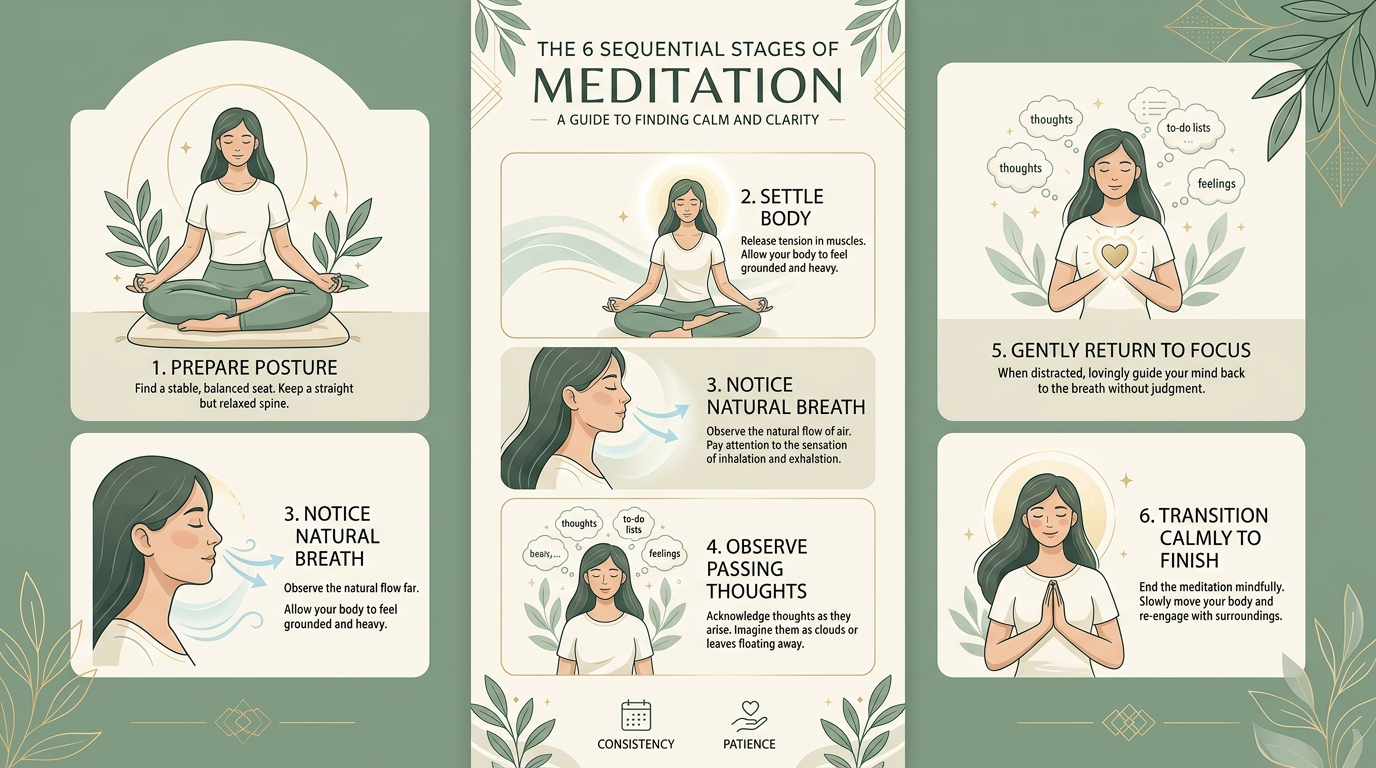
06 · Step-by-Step Practice Guide

How to Meditate Step-by-Step (ध्यान की ६ सरल सीढ़ियां)

Follow these six sequential stages to establish a daily mindfulness habit with confidence and ease.

Infographic showing 6 sequential stages of meditation
📋 6 Sequential Steps · Prepare ➔ Settle ➔ Notice ➔ Observe ➔ Return ➔ Finish Mindfully.
STEP 1

Prepare Posture

Find a stable, balanced seat on a floor cushion or chair with an upright yet comfortable spine.

STEP 2

Settle the Body

Softly close the eyes, drop your shoulders away from ears, and release tension in forehead and jaw.

STEP 3

Notice Natural Breath

Observe the cool touch of inhalation and the warm flow of exhalation without forcing the cadence.

STEP 4

Observe Passing Thoughts

When thoughts or plans arise, acknowledge them like clouds passing in the sky without self-criticism.

STEP 5

Gently Return to Focus

Patiently redirect attention back to your breath anchor whenever the mind drifts away.

STEP 6

Transition Calmly to Finish

Take 3 deep breaths, gently wiggle fingers and toes, and slowly open your eyes feeling refreshed.

07 · Somatic Exploration

Body Awareness in Meditation (सचेतन काया ध्यान)

Explore how physical posture, respiratory expansion, and muscular release harmonize during stillness.

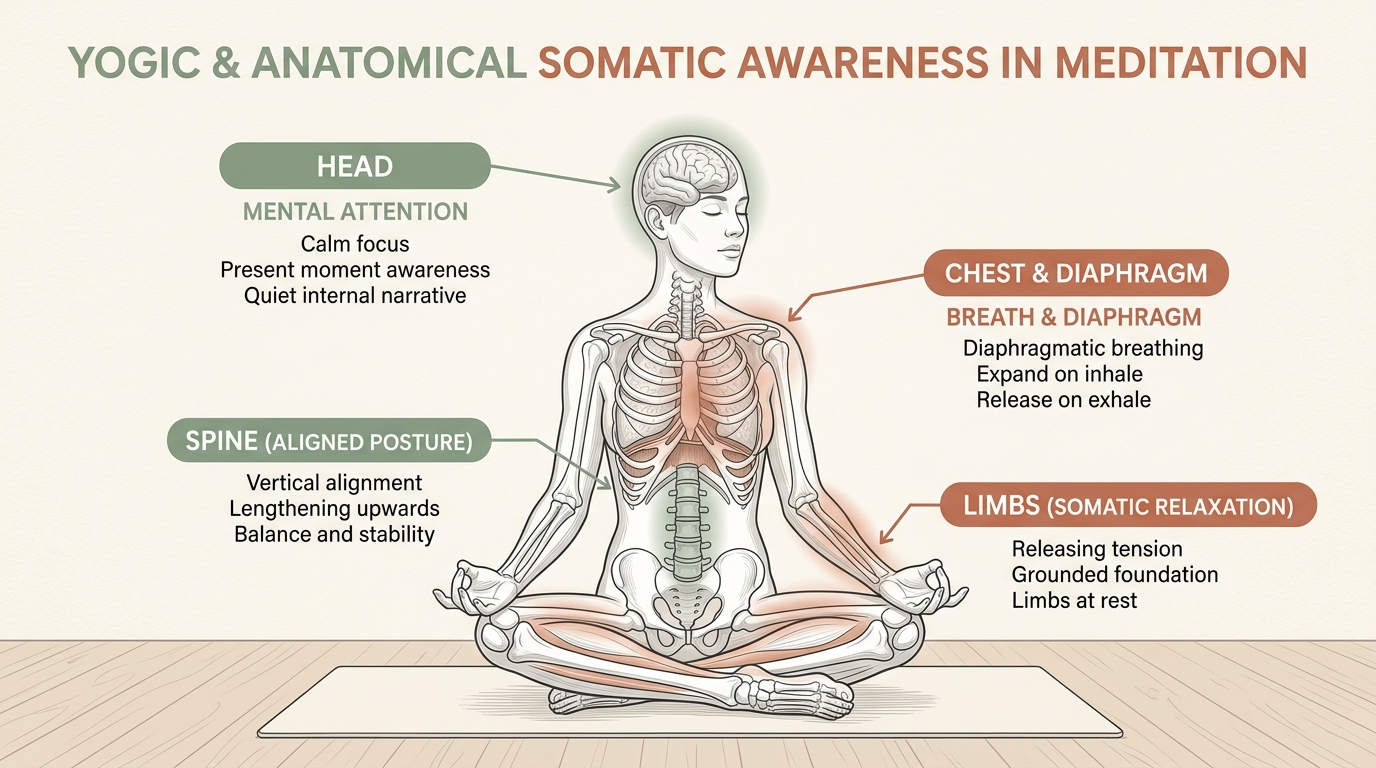
Yogic and anatomical somatic awareness in meditation showing head, chest, spine and limbs
🧘 Somatic Integration · Physical alignment creates the stable vessel for mental clarity.
1. HEAD & CRANIAL

🧠 Mental Attention & Facial Softening

Relax the space between the eyebrows (Third Eye), unclamp teeth, and let the tongue rest gently on the palate.

2. CHEST & DIAPHRAGM

🫁 Breath Expansion & Vagus Tone

Feel the 360-degree expansion of the rib cage and gentle descent of the diaphragm on each inhalation.

3. SPINE & AXIS

🧘 Aligned Postural Stability (मेरुदंड)

Lengthen the crown of the head skyward while rooting sitting bones downward for effortless spinal poise.

4. LIMBS & BASE

🌙 Somatic Grounding & Relaxation

Rest hands comfortably on thighs or knees with palms up or down; let leg muscles completely surrender to gravity.

08 · Practitioner Wisdom

Practice Journey & Essential Tips (अभ्यास के नियम)

A realistic roadmap to navigate common roadblocks and build lasting contemplative consistency.

BEFORE PRACTICE

🌪️ Mental Clutter & Restlessness

Mind is carrying residue from tasks, emails, and sensory inputs. You may feel hurried, distracted, or skeptical.

DURING PRACTICE

🌊 Noticing & Returning

Thoughts naturally arise. You practice catching mind-wandering with kindness and returning to the breath anchor.

AFTER PRACTICE

✨ Grounded Presence & Clarity

Heart rate decelerates, parasympathetic tone rises, and a spacious calm lingers into your daily activities.

🌱

1. Start Small (2–5 Mins)

Consistency is far more powerful than duration. A daily 3-minute session builds stronger neural pathways than 30 minutes once a week.

🛋️

2. Choose Comfort

Do not suffer through agony. Use a firm cushion (Zafu) under your pelvis or sit upright on a sturdy chair with feet flat.

🫁

3. Natural Breathing

Never strain or artificially control your breath during silent meditation; simply let your body breathe itself.

☁️

4. Expect Distraction

A wandering mind does not mean you failed. The moment you realize your mind wandered is the exact moment of mindful awakening!

🔁

5. Return Gently

Treat your mind like a young puppy you are training: guide it back to the breath with patient, warm encouragement.

09 · Precision & Realignment

Common Mistakes vs Mindful Method (गलतियां vs सही विधि)

Realign your meditation mindset by letting go of rigid misconceptions.

❌ Wrong Approach

Trying to Stop All Thoughts

Fighting thoughts creates stress and frustration because the brain is biologically designed to think.

✅ Mindful Method

Observing Thoughts Without Attachment

Allow thoughts to arise, note them gently as "thinking", and return to your breath anchor.

❌ Wrong Approach

Rigid Painful Posture

Forcing knees or back into extreme positions causes distress that distracts from practice.

✅ Mindful Method

Stable, Supported Comfort

Elevate hips with a cushion or sit on a chair so the spine effortlessly stacks tall without strain.

❌ Wrong Approach

Judging Every Session

Labeling a session as "bad" if the mind was busy leads to disappointment and quitting.

✅ Mindful Method

Valuing the Practice of Returning

A busy session where you returned to breath 50 times gave your focus muscles a wonderful workout!

❌ Wrong Approach

Jumping Up Immediately

Opening eyes and instantly checking phone screens dissipates parasympathetic calm.

✅ Mindful Method

1 Minute of Quiet Reflection

Rest in silent gratitude for 60 seconds post-meditation to assimilate peace into your day.

10 · Timed Sadhana Sanctuary

Silent Meditation Timer (मौन ध्यान टाइमर)

Set your desired duration and meditate in tranquil stillness accompanied by gentle start and end singing bowl bells.

03:00
PAUSE · OBSERVE · REFLECT
RAMA’S YOGA · ASANA STUDY ACADEMY

Comprehensive Yoga Asana Study Material

A systematic reference for Yoga students and teachers — organized by units, with meaning, technique, breathing, benefits, precautions, modifications and teaching cues.

65ASANAS
9 UNITS
Interactive Biomechanics

Muscle & Body Explorer

Vertebral Column & Stabilizers

Spine & Lumbar Alignment

The spine participates in flexion, extension, lateral flexion, and axial rotation. Practicing balanced asanas strengthens spinal erectors, decompresses intervertebral discs, and promotes optimal posture.

Recommended Asanas (Click to View):
TABLE OF CONTENTSStudy Units
65 asanasOpen any asana for complete study notes
UNIT 1 · INTRODUCTION TO YOGA ASANA

Sthira Sukham Asanam

Asana is more than stretching or physical exercise. Practice integrates posture, breath awareness, stability, mobility, concentration, relaxation and body awareness.

Physical Mobility · Strength · Balance · Coordination Respiratory Comfortable breathing · Breath awareness Mental Concentration · Mindfulness · Relaxation Yogic Pranayama → Pratyahara → Dharana → Dhyana
PROFESSIONAL TEACHER CHECKLIST

20 Questions for Every Asana

  1. Sanskrit name & meaning
  2. Type of asana
  3. Starting position
  4. How to enter
  5. How to maintain
  6. How to exit safely
  7. Breathing pattern
  8. Alignment
  9. Joint movements
  10. Muscle action
  11. Lengthened tissues
  12. Benefits
  13. Common mistakes
  14. Precautions
  15. Contraindications
  16. Beginner modification
  17. Advanced variation
  18. Counterpose
  19. Verbal cue
  20. Progression
ASANA MODIFICATION SYSTEM

Modify Before You Force

01 · Reduce Range02 · Bend Knees03 · Use Blocks04 · Use Strap05 · Use Wall06 · Use Chair07 · Choose Alternative
FINAL PRINCIPLE

Student → Ability → Mobility → Stability → Breathing → Alignment → Goal → Modification → Progression

Golden Rule: Do not force the body into the posture. Develop the body's ability to perform the posture safely.

Classical Solar Vinyasa · 12 Posture Sequence

12-Step Surya Namaskar Studio (सूर्य नमस्कार)

Master the classical 12-step sun salutation with pedagogical alignment illustrations, Vedic solar mantras, chakra awareness, and guided rhythmic breathing.

Pace:
STEP 01 OF 12
Step 01: Pranamasana · प्रणामासन
🔍 Tap to Zoom
Anahata · अनाहत (Heart Chakra)

प्रणामासन · Pranamasana

Prayer Pose
💨 Exhale (श्वास बाहर) ☀️ ॐ मित्राय नमः · Om Mitraya Namaha Chakra: Anahata

Stand tall at the front edge of the mat, feet grounded together, and bring palms together in front of the chest in Namaskar mudra. Maintain a peaceful smile and center the breath.

💡 Pedagogical Alignment Key (शिक्षक निर्देश)

चेहरे पर शांत मुस्कान रखें · दोनों हाथ जोड़कर नमस्कार मुद्रा में रखें · दोनों पैर साथ रखें और सीधा खड़े रहें।

🎬 12-Step Interactive Filmstrip (Tap any thumbnail to jump) Step 1 to 12 Complete Cycle
RAMA’S YOGA · SCIENTIFIC YOGA ACADEMY

Scientific Yoga Study Material

A systematic learning space for Yoga students and teachers — connecting traditional Yoga with anatomy, physiology, biomechanics, neuroscience, exercise science, safety and evidence-based teaching.

30 LessonsAnatomyPhysiologyBiomechanicsBreathingResearch
01Understandthe body
02Observethe movement
03Modifyfor the student
04Progresswith safety
05Evaluatethe evidence
⌕
MASTER FRAMEWORK

From Tradition to Responsible Teaching

TRADITION→ANATOMY→PHYSIOLOGY→BIOMECHANICS→BREATH→NERVOUS SYSTEM→ASSESSMENT→MODIFICATION→SAFETY→EVIDENCE
STUDY + EXAM PREPARATION

Scientific Yoga Teacher Checklist

For any asana, a teacher should be able to explain the name and meaning, purpose, entry and exit, joint actions, anatomical planes, muscle action, breathing, balance, biomechanics, common errors, modifications, progression, safety and the evidence supporting the claim.

01 · Anatomy02 · Joint Movement03 · Muscle Action04 · Planes & Axes 05 · Biomechanics06 · Breathing07 · Physiology08 · Safety 09 · Modification10 · Progression11 · Research12 · Teaching Cue
🌱 Ages 5–15 · Move · Breathe · Imagine · Relax
Young Yogis Academy · Rama’s Yoga

🌈 Welcome to Kids Yoga Adventure

Move your body, use your imagination and discover yoga through fun adventures. Scientific, joyful, and posture-correcting yoga designed to reverse screen fatigue, boost academic focus, and build strong, agile bodies under certified Physical Education (B.P.Ed.) & Yogic Science guidance.

🎒 Adventure Passport: ⭐ 0 Stars 🏆 0 Badge 🌳 Jungle: 0%
🗺️ Choose an Adventure ↓
Leo the Little Lion - Kids Yoga Guide
Meet Your Guide

Leo the Little Lion

"Join me on a magical jungle trail! We will stretch like trees, breathe like brave lions, and rest under the calm night stars."

⏱ Approx. 8–12 Min Story Session · 100% Screen-Detox Friendly
Interactive Story Modes

🗺️ Choose Your Yoga Adventure

Pick a magical world to explore through yoga poses, mindful movement, and breathing challenges.

Available Now
🌳

Jungle Adventure

Meet friendly animals, become a tall tree & steady cobra, practice lion's courage breath, and relax under the stars.

🦁 5 Chapters ⏱ 8–12 Mins ⭐ 50 Stars
Coming Soon
🚀

Space Adventure

Blast off to distant galaxies! Learn zero-gravity balance, star warrior stretches, and asteroid focus games.

🌌 5 Chapters 🪐 Cosmic Focus
Coming Soon
🌊

Ocean Adventure

Dive deep into coral reefs! Meet playful dolphins, majestic sea turtles, and practice ocean wave rhythmic breathing.

🐬 5 Chapters 🐠 Calm Breathing
Coming Soon
🏰

Magic Adventure

Step inside an enchanted kingdom! Discover mythical dragon poses, crystal palace stillness, and magical focus.

✨ 5 Chapters 🛡️ Heroic Balance
🎯

Focus & Memory

Trataka gazing & balancing poses that sharpen concentration, enhance exam recall, and calm restlessness.

📏

Height & Posture

Spine-lengthening stretches to correct study slouch, counteract heavy bags, and support natural growth.

👁️

Screen Detox

Soothing eye yoga exercises (Netra Vyayam) and palming to eliminate digital strain and headaches.

🦁

Confidence & Energy

Pranayama (Bhramari & Lion Breath) to channel hyperactive energy into positive creativity and emotional calm.

Interactive Kids Yoga Deck

Fun Animal Poses (खेल-खेल में योग)

Click any animal pose to reveal its secret superpower and step-by-step guidance!

💡 Tap a Card to Try
Curriculum & Age Tiers

Age-Specialized Kids Batches

Customized pedagogical approach matching every child's physical development and attention span.

Foundation

Little Sprouts

Ages 5 to 8 Years

Playful storytelling yoga, animal movement games, and joyful breath awareness.

  • Interactive animal pose stories
  • Motor coordination & balance games
  • Gentle breathing & bedtime calm
  • 30-Min energetic fun sessions
Enroll Little Sprouts ↗
Academic & Sports

Teen Achievers

Ages 13 to 17 Years

Stress management for board exams, athletic flexibility, and emotional balance.

  • Exam anxiety relief & deep rest (Yoga Nidra)
  • Athletic mobility & injury prevention
  • Endocrine balance & positive mindset
  • Personalized 1-on-1 guidance available
Enroll Teen Achievers ↗
Pedagogical Framework & Safety

👨‍👩‍👧 For Parents: Scientific Story-Based Yoga

Designed by certified Physical Education (B.P.Ed.) & Yogic Science faculty Rama for holistic child development, posture alignment, and screen detox.

🌿 Certified Child Pedagogy

Today's Activity

Jungle Yoga Adventure
Approx. 8–12 Minutes duration structured to hold young attention spans with storytelling.

Curriculum Activities

4 Movement Poses (Tree, Cobra, Cat, Frog)
1 Brave Breathing (Simhasana Breath)
1 Night Forest Relaxation (Parasympathetic Calm)

Safe Practice Guidelines

"Children should practice in a comfortable, clear space on a yoga mat or carpet. Adult supervision may be helpful depending on the child's age and activity."

Parent & Child Resource

Free 10-Minute Daily Kids Routine Guide

Get Rama’s morning energizer & bedtime calm routine with posture illustrations delivered right to your WhatsApp.

🧘 BHRAMARI PRANAYAMA & BRAHMI YOGA · VEDIC RESONANCE SUITE

Brahmi & Bhramari Yoga भ्रामरी प्राणायाम — The Humming Bee Breath & Mind Harmony

Discover the transformative acoustic science of Bhramari Pranayama (भ्रामरी प्राणायाम) and Brahmi Yoga. Harness cranial acoustic vibrations to trigger a 15-fold Nitric Oxide surge, stimulate the Vagus nerve, induce Alpha brainwaves, and dissolve mental fatigue through classical Shanmukhi Mudra.

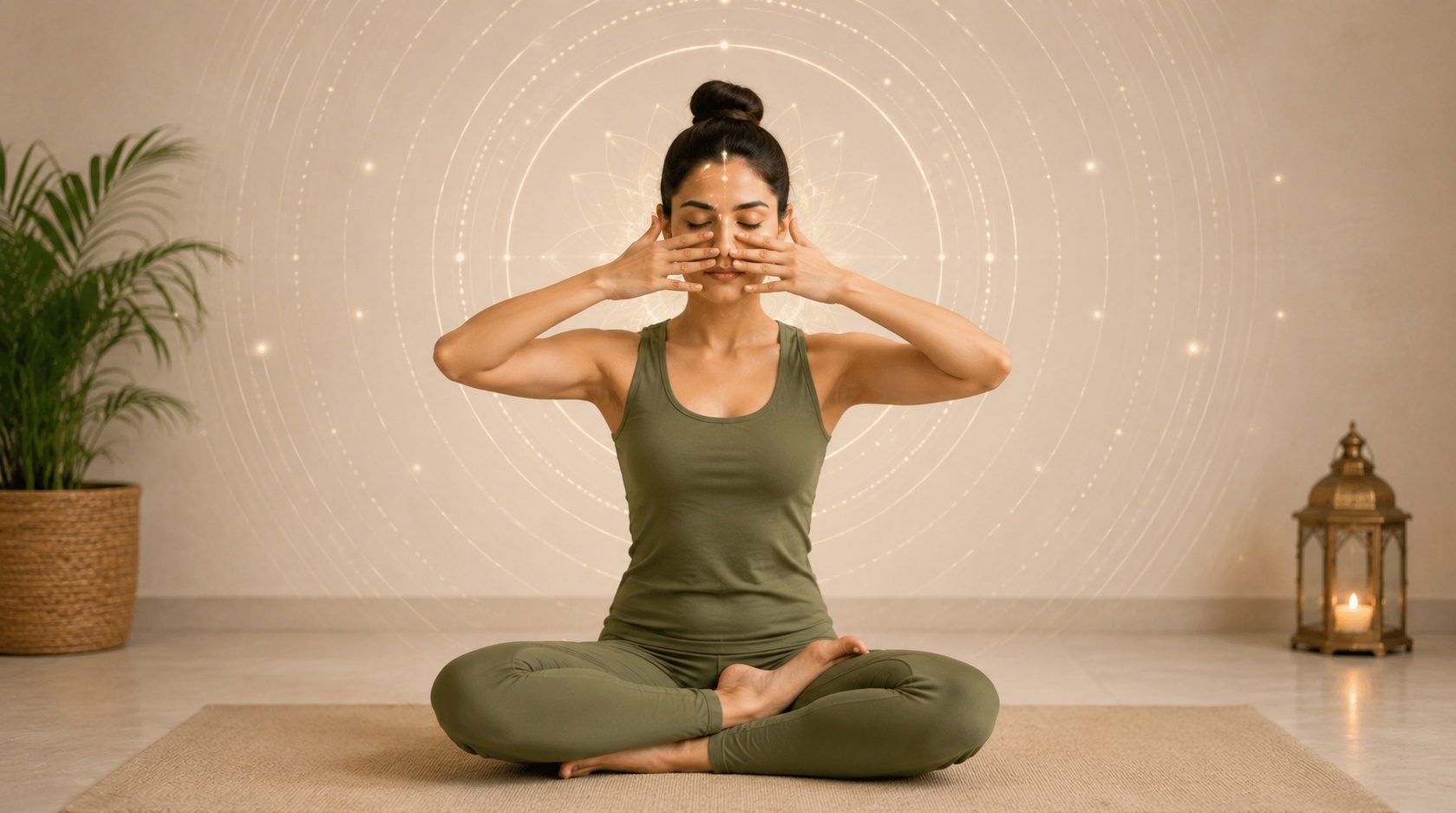
Yoga practitioner performing Shanmukhi Mudra in Bhramari Pranayama with vibration resonance waves
🧘 Shanmukhi Mudra (षण्मुखी मुद्रा) · The 6-Gate Sensory Pratyahara for Deep Cranial Resonance
🐝

Acoustic Bee Humming Synthesizer

Real harmonic sine-wave sound generator (128 Hz & 432 Hz) for synchronous chanting.

Ready to chant
15x Nitric Oxide (NO) Surge
120 Hz Vagus Nerve Resonance
8–12 Hz Alpha EEG Brainwaves
6 Gates Shanmukhi Pratyahara
01 · Concept & Tradition

What is Bhramari Pranayama & Brahmi Yoga? (भ्रामरी प्राणायाम क्या है?)

Originating from the classical Hatha Yoga Pradipika (Chapter 2, Verse 68), Bhramari is named after the female black bumblebee (Bhramara).

During Bhramari, the practitioner inhales slowly through both nostrils and exhales while generating a smooth, continuous, resonant humming sound ("Mmmmmm") from the throat and soft palate.

This deliberate acoustic resonance generates micro-mechanical sound waves that oscillate across the sphenoid, ethmoid, and maxillary paranasal sinuses, instantly clearing mental turbulence and inducing tranquil stillness.

🐝
Acoustic Vibration (ध्वनि कम्पन)

Physical sound waves vibrate the skull bones and soft tissues, gently massaging the brainstem and pituitary gland.

👁️
Pratyahara (इन्द्रिय प्रत्याहार)

Closing the sensory gates with Shanmukhi Mudra shifts awareness away from external chaos into internal peace.

🌊
Autonomic Reset (स्नायु तंत्र संतुलन)

Quickly terminates the fight-or-flight stress cascade, activating deep parasympathetic healing.

ॐ

Hatha Yoga Pradipika (२.६८)

"वेगाद् घोषं पूरकं भृङ्गनादं, भृङ्गीनादं रेचकं मन्दमन्दम्।
योगीन्द्राणामेवमभ्यासयोगात्, चेतोभेदा जायते काचिदानन्दलीला॥"

Translation: Inhaling rapidly like a male bee and exhaling slowly while humming like a female honeybee produces an indescribable ecstasy of bliss in the hearts of accomplished yogis.

02 · Clinical Science & Neuroscience

Scientific Benefits of Bhramari (वैज्ञानिक लाभ एवं चिकित्सा शोध)

Modern physiological research from the Karolinska Institute and global neurology centers validates the remarkable medical mechanisms of humming.

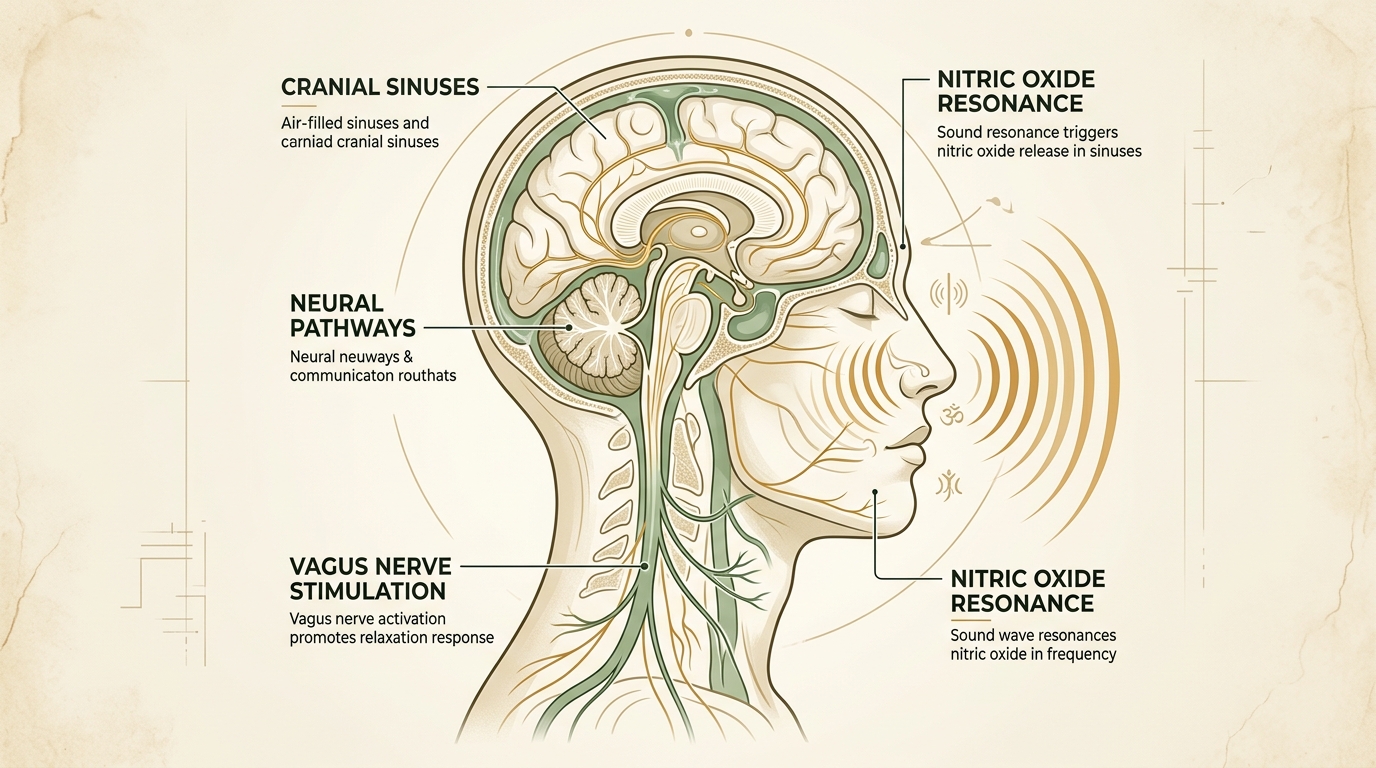
Scientific illustration of cranial sinuses, vagus nerve stimulation, and nitric oxide resonance during Bhramari Pranayama
🔬 Cranio-Vagal Anatomy · Acoustic vibration drives Nitric Oxide gas exchange from paranasal sinuses into pulmonary circulation.
1500% Increase
🧪

15x Nitric Oxide (NO) Surge

Groundbreaking studies (Weitzberg & Lundberg, Karolinska Institute) demonstrated that nasal humming increases paranasal sinus Nitric Oxide production by 15-fold compared to quiet breathing.

  • Vasodilates pulmonary blood vessels and enhances oxygen transport.
  • Acts as a powerful natural broad-spectrum antiviral and antimicrobial shield in nasal passages.
VNS Activation
⚡

Vagus Nerve Stimulation (VNS)

Acoustic sound vibrations at ~120 Hz travel through the auricular branch (Arnold's nerve) and laryngeal branches of the 10th Cranial Nerve (Vagus).

  • Stimulates acetylcholine release to slow heart rate and lower arterial blood pressure.
  • Significantly elevates Heart Rate Variability (HRV), a clinical marker of stress resilience.
EEG Synchronization
🧠

Alpha & Theta Brainwave Synchrony

Quantitative EEG studies show that just 5–10 minutes of Bhramari increases high-amplitude Alpha (8–12 Hz) and Theta (4–8 Hz) waves across the prefrontal and parietal cortex.

  • Promotes serene alertness and effortless concentration without drowsiness.
  • Synchronizes left and right cerebral hemispheres, facilitating creative insight.
HPA Axis Regulation
📉

Cortisol & Amygdala De-Escalation

Clinical trials on high-stress individuals demonstrate significant decreases in salivary cortisol, systolic blood pressure, and subjective anxiety scales after Bhramari practice.

  • Quiets hyperactive amygdala alarm signals in the emotional brain.
  • Highly therapeutic for tension headaches, exam stress, and chronic insomnia.
03 · Interactive Mudra Diagram

Shanmukhi Mudra & Cranial Gateways (षण्मुखी मुद्रा विधि)

Shanmukhi Mudra (the Six-Gate Seal) is the classical hand gesture used in Bhramari. Select any gate below or click directly on the diagram to explore proper finger placement and anatomical resonance.

1. Ears (Thumbs) 2. Eyes (Index) 3. Nose 4 & 5. Lips (Ring & Pinky) 6. Cranial Resonance
👆 Tap buttons above or click hotspots on diagram to inspect any gate
GATE 1 OF 6 · AUDITORY CLOSURE

👂 1. Ears — Thumbs on Tragus (श्रवण द्वार)

👍 Both Thumbs 🛑 Press Tragus Flap 🔇 Seal External Noise

Place your thumbs gently on the Tragus (the small triangular flap of cartilage in front of the ear canal). Do not insert your fingers into the ear canal; simply press the cartilage inwards to block external ambient sound.

🌿 Yogic Purpose: Sealing external sounds amplifies the internal cranial resonance by over 200%, allowing your mind to anchor directly on the internal humming vibration.
04 · Step-by-Step Practice Guide

How to Practice Bhramari Step-by-Step (अभ्यास की सही विधि)

Follow these five authentic steps to master your daily Bhramari sadhana safely.

Step 1

Seated Alignment & Grounding (आसन एवं स्थिति)

Sit in a comfortable meditative posture such as Sukhasana, Padmasana, or Vajrasana with your spine naturally tall, neck aligned, and shoulders relaxed. If sitting on the floor is uncomfortable, sit upright on a sturdy chair with feet flat on the ground.

Step 2

Positioning Shanmukhi Mudra (षण्मुखी मुद्रा का धारण)

Raise your hands. Rest thumbs on ear tragus, index fingers over closed eyelids, middle fingers alongside the bridge of the nose, ring fingers above the upper lip, and little fingers below the lower lip. Keep the elbows lifted out to the sides at shoulder height to open the thoracic chest.

Step 3

Jaw Setup & Inhalation (दांत एवं श्वास)

Keep your teeth slightly separated (approx. 2mm) so they do not touch, and place the tip of the tongue gently against the upper palate behind your front teeth (Nabha Mudra). Close your mouth and inhale slowly and deeply through both nostrils into the abdomen and lungs.

Step 4

Smooth Resonant Humming Exhalation (गुंजन एवं रेचक)

Gently press the tragus cartilage closed with your thumbs. Slowly exhale through your nose while producing a smooth, continuous, medium-pitched humming sound: "Mmmmmmm...". Feel the acoustic vibration resonating through your palate, sinuses, eyebrows (Ajna Chakra), and crown.

Step 5

Silent Observation & Stillness (मौन एवं अनुभूति)

When the exhalation is complete, release the thumb pressure from your ears, keep your eyes closed, and rest in absolute silence for 2–3 seconds. Observe the remaining subtle vibrational currents throughout the nervous system before starting the next round.

05 · Guided Audio-Visual Pacer

Interactive Bhramari Pacer (इंटरैक्टिव भ्रामरी पेसर)

Synchronize your breath with our visual breath visualizer and real acoustic humming sound tones. Choose your practice duration and pacing rhythm below.

Ready ● Press Start
Rounds Completed: 0
06 · Practical Mastery & Guidelines

Tips, Best Practices & Precautions (महत्वपूर्ण नियम एवं सावधानियां)

Follow these traditional and clinical recommendations to maximize benefits and avoid common strain.

🌅

Best Time to Practice

Early morning during Brahma Muhurta (sunrise) on an empty stomach yields peak clarity. Evening practice right before bed is highly effective for inducing deep restful sleep.

🦷

Keep Teeth 2mm Apart

Never clench your jaws. Keeping a tiny gap between your upper and lower teeth allows sound waves to resonate freely through the skull bones without damping.

👅

Nabha Mudra (Palate Touch)

Lightly touching the tip of the tongue to the roof of the mouth behind the front teeth acts as an acoustic bridge, amplifying vibration into the sphenoid sinus.

🐝

Pitch Selection

Maintain a comfortable, soothing medium-pitch frequency. Avoid straining for an unnaturally high screech or forced low bass. Smooth consistency is key.

⚠️ Precautions & Contraindications (सावधानियां)

  • Active Ear Infections: If you have an active middle ear infection (otitis media) or ear discharge, do not press the tragus flap; practice with hands on knees.
  • Severe Nasal Blockage: If nasal passages are congested due to acute cold, perform gentle steam inhalation or Jal Neti before practice.
  • Do Not Practice Lying Flat: Always practice seated upright so the spine and diaphragm remain completely free and uncompressed.
07 · Technical Precision

Common Mistakes vs Correct Method (गलतियां vs सही विधि)

Refine your technique by avoiding these frequent beginner errors.

❌ Wrong

Pressing Deep Inside Ear Canal

Inserting fingertips inside the ear canal can cause irritation and pressure damage.

✅ Correct

Pressing Only the Tragus Cartilage

Gently push the outer triangular flap of cartilage over the ear opening with your thumbs.

❌ Wrong

Clenching Teeth & Tight Jaw

Clenching teeth dampens sound waves and creates tension in temporal muscles.

✅ Correct

Teeth Slightly Apart (2mm Gap)

Allows acoustic resonance to vibrate freely across the cranial cavity and brainstem.

❌ Wrong

Forced Loud Screaming Tone

Straining the vocal cords causes throat irritation and sympathetic arousal.

✅ Correct

Soft, Smooth, Nasal Drone

A gentle, steady, effortless bee hum that naturally sustains for 8–15 seconds.

❌ Wrong

Opening Eyes Immediately

Jumping into external activity right after exhalation dissipates the internal calm.

✅ Correct

Soaking in Silent Stillness

Stay with closed eyes for 1–2 minutes post-session to assimilate Alpha brainwave calm.

08 · Test Your Understanding

Check Your Understanding (ज्ञान परीक्षा)

Test your knowledge of Bhramari Pranayama, Shanmukhi Mudra, and its neuro-physiological benefits.

Question 1 of 5 Score: 0/5
09 · Daily Sadhana Reflection

Your Bhramari Practice Reflection

Integrate the sacred acoustic resonance of Bhramari into your daily yoga and meditation routine.

✓
Shanmukhi Mudra Perfected

Sealed the 6 sensory gateways with gentle thumb and finger placement.

✓
Nitric Oxide & Sinus Resonance

Generated smooth cranial vibrations to boost nitric oxide and dilate airways.

✓
Vagus Nerve & Alpha Calm

Activated parasympathetic recovery and induced high-amplitude Alpha brainwaves.

Ready to deepen your breath and meditation sadhana?

Practice Bhramari with Rama's guided sessions, live soundscapes, or full-body asana explorer.

🐝 Practice Bhramari Pacer 🧘 Meditation Pacer 🎧 Soundscapes
Rama’s Yoga — Rama in meditation Rama's Yoga seal
Meet Your Guide

Meet Rama

Yoga · Wellness · Mindful Living

Guiding individuals toward greater balance, flexibility, strength and inner wellbeing through authentic yoga, mindful movement and holistic wellness practices.

M.A. Yoga
Master of Arts in Yoga
B.P.Ed.
Bachelor of Physical Education
DNHE
Diploma in Nutrition & Health Education
Yogic Science
Diploma in Yogic Science
Student Voices

What Our Students Say

Rama’s Yoga Journal

Wisdom for Everyday Living

A modern space for yoga knowledge, mindful living, breathwork, meditation and practical wellness insights.

Meditation

How to Build a Calm Daily Practice

Simple ways to work with attention, breath and awareness.

Mindfulness•5 min read
Read insight →
Wellness

Yoga, Recovery & Everyday Energy

Explore sustainable routines that balance movement, recovery and mindful living.

Wellness•4 min read
Read insight →
Asana

Why Consistency Matters More Than Intensity

Learn how gradual progression can make practice more sustainable.

Practice•4 min read
Read insight →
Beginner Yoga

Yoga for Beginners: A Complete Guide

Start a safe, simple yoga practice with foundations for breath, movement, consistency and mindful progression.

Rama’s Yoga Journal•Article
Read article →
Pregnancy Yoga

Benefits of Pregnancy Yoga

Explore gentle yoga principles that can support comfort, mobility, breathing and relaxation during pregnancy.

Rama’s Yoga Journal•Article
Read article →
Women’s Wellness

Yoga for Women’s Wellness

A practical look at how yoga can support mobility, strength, rest, awareness and sustainable wellness for women.

Rama’s Yoga Journal•Article
Read article →
Wellness

How to Start a Daily Yoga Practice

Build a realistic daily practice with simple habits, a repeatable structure and room for rest.

Rama’s Yoga Journal•Article
Read article →
Meditation

Understanding Meditation

Learn what meditation is, how attention is trained and how to begin without chasing a perfectly quiet mind.

Rama’s Yoga Journal•Article
Read article →
Meditation

Introduction to Pranayama

Understand the role of breath practices in yoga and the importance of gradual, comfortable practice.

Rama’s Yoga Journal•Article
Read article →
Yoga Science

Understanding Yoga Science

Discover how anatomy, physiology, biomechanics, psychology and research can inform responsible yoga practice.

Rama’s Yoga Journal•Article
Read article →
No articles in this category yet.
RAMA’S YOGA · YOGA SCIENCE

Understanding Yoga Science

Yoga science can be understood as a disciplined way of studying yoga practices through anatomy, physiology, biomechanics, psychology, neuroscience, exercise science and research while also respecting traditional context.

Anatomy and movement

Anatomy helps practitioners understand joints, muscles, posture and movement. It can improve teaching cues and help explain why a posture may need individual modification.

Physiology and breathing

Exercise physiology and respiratory science can help describe how movement and breathing interact with the body. A mechanism or theory should not automatically be presented as proof of a health outcome.

Research literacy

Good scientific practice distinguishes evidence from opinion. Study design, sample size, comparison groups, measurement and limitations all matter when interpreting research.

Responsible teaching

Scientific language should support safe, realistic teaching rather than exaggerated medical claims. Yoga education is strongest when curiosity is combined with humility about what the evidence actually shows.
Related articles

Yoga for Beginners: A Complete Guide →Benefits of Pregnancy Yoga →Yoga for Women’s Wellness →

Want guided support? Explore Rama’s Yoga classes or book a session tailored to your goals.

Book a Session
RAMA’S YOGA · MEDITATION

Introduction to Pranayama

Pranayama refers to yogic approaches to working with the breath. Breath practices range from simple awareness and paced breathing to more specialized techniques. Beginners should start with comfortable, non-straining methods.

Begin with breath awareness

Notice the natural rhythm of inhalation and exhalation without trying to force a change. This creates a foundation for later techniques.

Explore gentle pacing

A simple, comfortable pattern can help you observe how pace and attention interact. Keep the breath smooth and stop if you feel strain or light-headedness.

Learn technique before intensity

Some pranayama methods involve breath retention, forceful breathing or specific ratios. These should be learned progressively from a qualified teacher, especially when health conditions or pregnancy are relevant.

Safety note

Breathing practices are not a substitute for medical treatment. If a technique causes discomfort, dizziness, chest symptoms or unusual breathlessness, stop and seek appropriate professional advice.

Related articles

Yoga for Beginners: A Complete Guide →Benefits of Pregnancy Yoga →Yoga for Women’s Wellness →

Want guided support? Explore Rama’s Yoga classes or book a session tailored to your goals.

Book a Session
RAMA’S YOGA · MEDITATION

Understanding Meditation

Meditation is a family of practices that train attention, awareness or a particular mental quality. It does not require eliminating thoughts. For many beginners, the practice is simply noticing where attention goes and gently returning to the chosen focus.

Attention is the practice

You might focus on the breath, bodily sensations, a sound or another chosen object. When attention wanders, noticing that wandering is part of the exercise.

Start simply

Sit comfortably for a few minutes. Let breathing remain natural and use a gentle point of attention. Avoid judging the quality of the session.

Consistency matters

A short, regular practice can be easier to integrate than occasional long sessions. Increase duration gradually if it remains comfortable.

Keep expectations realistic

Meditation is not a guarantee of particular health outcomes. It is a skill-based practice that can be explored with curiosity and appropriate guidance.

Related articles

Yoga for Beginners: A Complete Guide →Benefits of Pregnancy Yoga →Yoga for Women’s Wellness →

Want guided support? Explore Rama’s Yoga classes or book a session tailored to your goals.

Book a Session
RAMA’S YOGA · WELLNESS

How to Start a Daily Yoga Practice

A daily yoga practice does not have to mean a long class every day. The goal is to create a repeatable ritual that supports movement, breathing and awareness without making practice another source of pressure.

Use a small starting point

Begin with 10–15 minutes if that is realistic. A short practice that happens consistently can build familiarity and confidence.

Create a repeatable structure

Try two minutes of settling, several minutes of mobility, a few foundational postures, a short breathing practice and one or two minutes of relaxation.

Let intensity vary

Some days may be active; others may be restorative. Recovery is part of sustainable practice.

Track consistency, not perfection

A simple calendar mark or note can help you notice patterns. Missing a day does not mean the routine has failed—return to practice when you can.

Related articles

Yoga for Beginners: A Complete Guide →Benefits of Pregnancy Yoga →Yoga for Women’s Wellness →

Want guided support? Explore Rama’s Yoga classes or book a session tailored to your goals.

Book a Session
RAMA’S YOGA · WOMEN’S WELLNESS

Yoga for Women’s Wellness

Women’s wellness is not one single goal. A useful yoga practice can combine mobility, strength, breathing, relaxation and body awareness while allowing the intensity and focus to change with individual needs and life stages.

Mobility and strength

Balanced practice can include comfortable joint movement, standing postures, supported strengthening and controlled transitions. The aim is capable movement rather than forcing flexibility.

Breath and recovery

Breathing practices and relaxation can create a deliberate transition out of a busy day. Keep breath work comfortable and avoid aggressive techniques unless appropriately taught.

Adapt to the individual

Sleep, work demands, training history, pregnancy, recovery and other factors can affect what feels appropriate. A personalized approach is often more useful than a fixed routine.

A sustainable approach

Choose practices you can repeat. Small, consistent sessions can be easier to maintain than an ideal routine that is too demanding.

Related articles

Yoga for Beginners: A Complete Guide →Benefits of Pregnancy Yoga →How to Start a Daily Yoga Practice →

Want guided support? Explore Rama’s Yoga classes or book a session tailored to your goals.

Book a Session
RAMA’S YOGA · PREGNANCY YOGA

Benefits of Pregnancy Yoga

Pregnancy changes the body continuously, so yoga during pregnancy should prioritize comfort, breathing, mobility, relaxation and individualized guidance rather than performance. A suitable practice is adapted to the stage of pregnancy and the individual’s health and comfort.

Potential benefits

Gentle yoga may help maintain comfortable movement, support awareness of posture and breathing, and provide time for relaxation. The experience differs for every person and should not be treated as a medical treatment.

Practice principles

Favor comfortable ranges of motion, steady breathing, supported positions and gradual transitions. Avoid practices that create pressure, dizziness, overheating or significant discomfort.

When to seek guidance

Pregnancy is a health context in which individual advice matters. Discuss exercise and yoga with your obstetric clinician or other qualified healthcare professional, particularly if there are complications, restrictions or new symptoms.

Safety note

This article is educational and does not replace medical care. Stop a practice and seek appropriate professional advice if you experience concerning symptoms or have been advised to restrict activity.

Related articles

Yoga for Beginners: A Complete Guide →Yoga for Women’s Wellness →How to Start a Daily Yoga Practice →

Want guided support? Explore Rama’s Yoga classes or book a session tailored to your goals.

Book a Session
RAMA’S YOGA · BEGINNER YOGA

Yoga for Beginners: A Complete Guide

Yoga can be a practical way to develop mobility, body awareness, breathing skills and a calmer relationship with movement. A beginner does not need advanced flexibility or difficult poses. The most useful starting point is a consistent practice built around comfort, attention and gradual progression.

Start with the basics

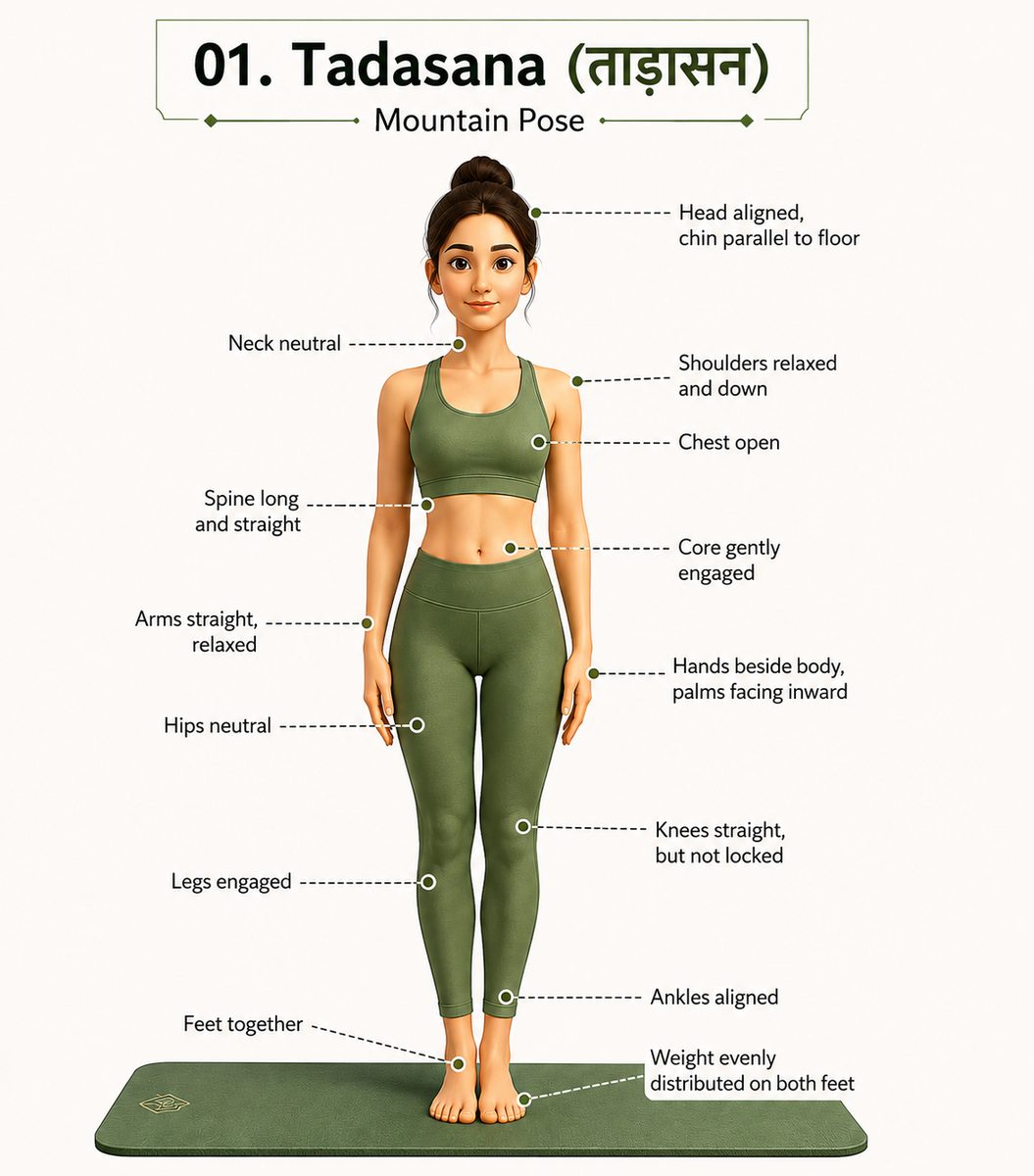
Begin with a few minutes of comfortable breathing, simple joint movements and foundational postures such as Tadasana, gentle cat–cow movements and supported seated positions. Learn what neutral, steady and comfortable feels like before adding complexity.

Build a simple sequence

A beginner session can include arrival and breathing, warm-up movements, a small number of standing or floor postures, a short relaxation and a quiet finish. Quality of attention matters more than the number of poses.

Progress without forcing

Flexibility varies from person to person. Use props or modifications when helpful, keep movements controlled and stop before sharp pain. Regular moderate practice is usually more sustainable than occasional intense sessions.

Make practice consistent

Choose a realistic time and repeat a short sequence several days a week. As familiarity grows, gradually extend duration or learn new techniques with qualified guidance.

Related articles

Benefits of Pregnancy Yoga →Yoga for Women’s Wellness →How to Start a Daily Yoga Practice →

Want guided support? Explore Rama’s Yoga classes or book a session tailored to your goals.

Book a Session
Begin Today

Your Journey to Balance Begins Here

Take a breath. Slow down. Move with awareness.

Explore Meditation
Get In Touch

Let's Begin Your Wellness Journey

Phone
9425877462
Call Now →
Email
ramasyogastudio@gmail.com
Send Email →
Location
Bhopal, MP
View Location →
WhatsApp
Chat with Rama's Yoga
Chat Now →

Send a Message

Bhopal, Madhya Pradesh
✅ Changes Saved & Applied Live to Website!
Chat with Rama's Yoga